Contact Us!
How can we help?
Looking for your dream holiday rental, a permanent home, or your next investment in Nice? We're here to help. Contact us and we'll get back to you within 24 hours.

August on the French Riviera is made for long mornings by the sea, colourful old towns, coastal train journeys and evenings that stretch well beyond sunset.
It is also one of the busiest times of the year. Roads can become crowded, parking is often limited and trying to visit too many places in a single day can quickly turn a Mediterranean holiday into a race against time.
The best way to experience the region is to choose one central base and explore the coast gradually.
From Nice, many of the Riviera’s most beautiful destinations can be reached by train or local bus. Villefranche-sur-Mer, Saint-Jean-Cap-Ferrat, Antibes, Cannes and Menton can each become a relaxed day trip, allowing you to return to the same comfortable address every evening.
This six-day French Riviera itinerary is designed for travellers who want to see the essentials without hiring a car and without rushing through every destination.
Day 1 — Nice: Begin with the Rhythm of the Riviera
Your first day should be dedicated to Nice itself.
Begin in the early morning, when the streets of the Old Town are still relatively quiet. Walk through then arrow lanes of Vieux Nice, pause around Cours Saleya and continue towards the sea.
From there, climb to Castle Hill for one of the most memorable views over the Baie des Anges, the terracotta rooftops of the Old Town and the Port of Nice. The climb is best completed before the hottest part of the day, although a lift is also available for those who prefer a gentler start.
Spend the late morning walking along the Promenade des Anglais or swimming at one of the beaches below the Quai des États-Unis. Nice’s beaches are pebbled, so water shoes can make the experience considerably more comfortable.
After lunch, slow the pace. August afternoons are better suited to a museum, a shaded terrace or a quiet break at your accommodation than to an ambitious programme.
When the temperature begins to soften, return to Place Masséna and continue towards the Old Town for dinner. Your first evening should not be overplanned. Allow yourself time to wander, choose a terrace and become accustomed to the slower Mediterranean rhythm.
Day 2 — Villefranche-sur-Mer: Colour, Calm and a Sheltered Bay
Only a short journey from Nice, Villefranche-sur-Mer feels immediately different.
The town unfolds around one of the Riviera’s most recognisable bays, with colourful façades descending towards the harbour and the Mediterranean. It is compact enough to discover on foot, but varied enough to fill an entire day.
Arrive in the morning and begin in the old town. Walk through the narrow streets before descending towards the waterfront and the small fishing port. The atmosphere is less formal than in some of the Riviera’s larger destinations, making Villefranche particularly suited to a slow morning.
The Rue Obscure offers a glimpse into the town’s medieval character, while the waterfront provides a natural place to pause over coffee or an early lunch.
In the afternoon, spend time at Plage des Marinières. Its position inside the bay generally creates a more sheltered setting than the open shoreline of Nice. The beach is easily reached from the old town and provides a simple combination of swimming, sea views and a relaxed atmosphere.
Remain until the late afternoon, when many day visitors begin to leave and the colours of the bay become softer.
Villefranche does not require an extensive checklist. Its pleasure lies in moving slowly between the old streets, the harbour and the water.
Day 3 — Saint-Jean-Cap-Ferrat: Coastal Paths and Mediterranean Elegance
Saint-Jean-Cap-Ferrat offers a quieter and greener side of the French Riviera.
The peninsula is known for its coastal paths, discreet coves and Mediterranean vegetation. It is a destination best experienced on foot, with enough time to stop whenever the view opens towards the sea.
Start early and choose a section of the coastal path according to the temperature and your walking ability. The route around the peninsula can be demanding in the August heat, so it is not necessary to complete the entire circuit. A shorter walk followed by time at the beach often creates a more enjoyable day.
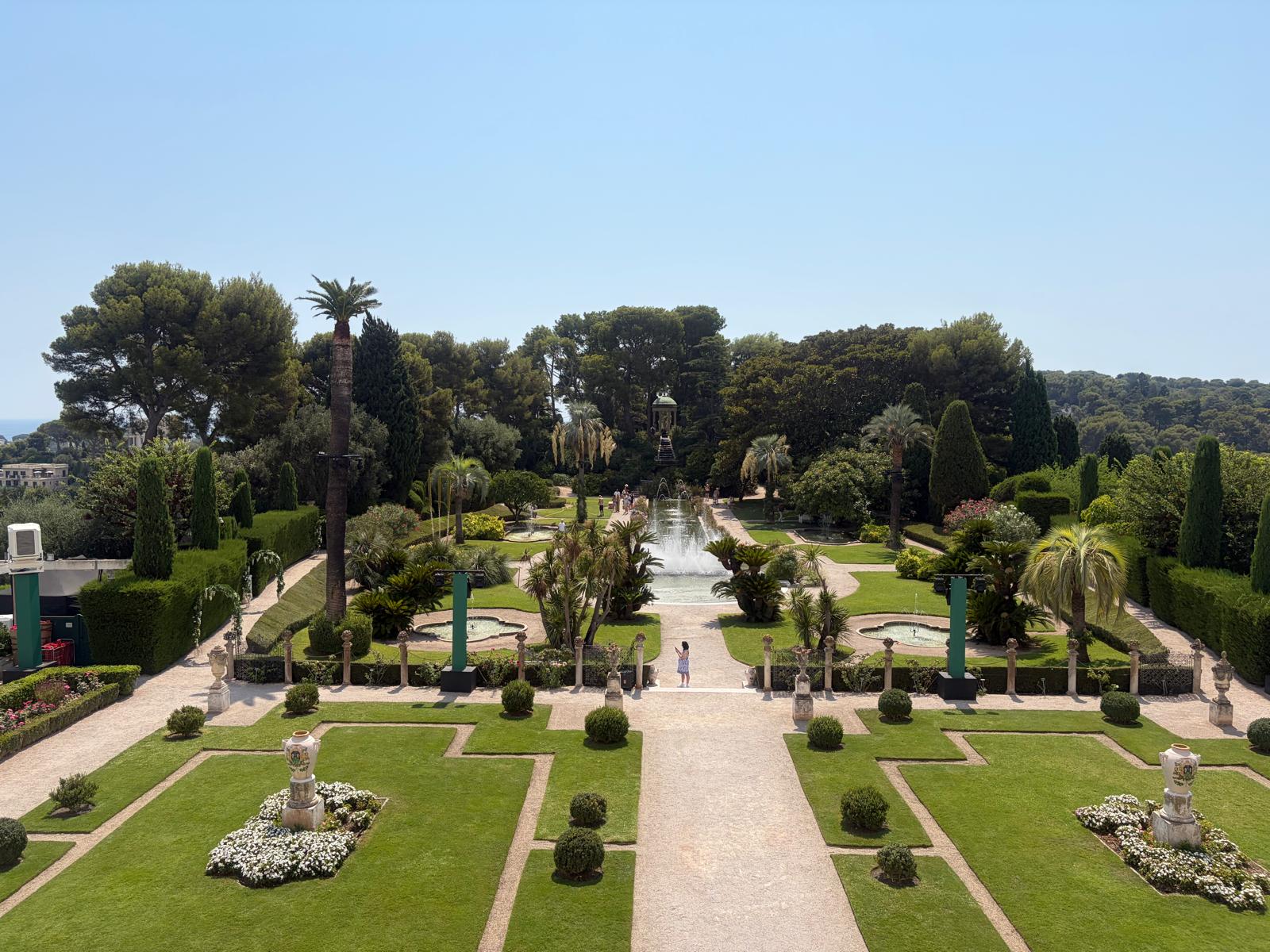
For a cultural interlude, visit the Villa and Gardens Ephrussi de Rothschild. The Belle Époque residence and its themed gardens provide a striking contrast to the natural coastline surrounding the peninsula.
Afterwards, continue towards the village or choose a nearby beach for lunch and swimming. Paloma Beach and Plage de Passable are among the peninsula’s best-known seaside settings, although advance reservations may be necessary for private establishments in August.
Saint-Jean-Cap-Ferrat rewards travellers who resist the temptation to do too much. A coastal walk, a garden visit, a long lunch and a swim are enough to create a complete day.
For a more extensive exploration of the eastern Riviera, including Èze and Monaco, read our guide to the French Riviera’s most elegant eastern escape.
Day 4 — Antibes: Old Stones, Art and the Mediterranean
On the fourth day, travel west towards Antibes.
The old town is enclosed by historic ramparts overlooking the sea, creating one of the most atmospheric walks on the western side of the Riviera. Begin near Port Vauban before entering thehistoric centre through its narrow streets and small squares.
The Marché Provençal is a natural morning stop. Depending on the day and season, its stalls offer fruit, vegetables, flowers, cheeses, spices and other regional products. It is an ideal place to experience the everyday flavours of Provence before the centre becomes busier.
Continue towards the Picasso Museum, housed inside the Château Grimaldi. Its location above the Mediterranean makes the visit as memorable for the setting as for the collection.
Afterwards, follow the ramparts and allow time to explore the Safranier district, one of the most intimate parts of the old town.
In the afternoon, choose between a swim near the centre or a longer lunch in the historic streets. Antibes combines culture, coastal views and beach time without requiring complicated transport once you arrive.
The return journey to Nice is straight forward, but there is no need to leave too early. Antibes becomes particularly pleasant in the late afternoon, when the stone walls reflect the softer light from the sea.
Day 5 — Cannes: From the Croisette to Le Suquet
Cannes is often associated with red carpets, luxury hotels and the international film festival, but the city offers more than its glamorous reputation.
Begin along the Croisette before the midday heat. The promenade provides views across the bay, with beaches on one side and some of the city’s most recognisable hotels on the other.
Continue towards the Palais des Festivals and the old port, then leave the modern seafront behind as you climb towards Le Suquet.
This historic district reveals a more intimate side of Cannes. Narrow streets, old stone houses and elevated viewpoints create a contrast with the polished atmosphere of the Croisette below.
For lunch, choose the area around the Marché Forville or one of the streets leading towards Le Suquet. The market district provides a more local and relaxed setting than the beachfront.
The afternoon can be spent at the beach, shopping around Rue d’Antibes or simply enjoying the atmosphere of the old port.
Travellers who have additional time may consider a separate day for the Lérins Islands. However, trying to combine the islands, central Cannes and Le Suquet in a single August day can feel rushed. The Riviera is better enjoyed when one memorable experience is allowed to take priority.
For more ideas involving Cannes, art, vineyards and Mediterranean gastronomy, discover our cultural and gastronomic French Riviera itinerary.
Day 6 — Menton: An Italian-Flavoured Finale
Finish the itinerary in Menton, near the Italian border.
Menton is one of the French Riviera’s most photogenic towns, with ochre and pastel façades rising above the sea. Its position at the eastern end of the French coastline gives it a distinctive atmosphere, blending French Riviera elegance with visible Italian influences.
Arrive early and begin at Plage des Sablettes. From the waterfront, the view towards the old town creates one of Menton’s most recognisable scenes.
Continue upwards through the historic centre towards the Basilica of Saint-Michel Archange. The streets become steeper as you climb, but the changing views over the rooftops and sea make the walk worthwhile.
Menton’s association with lemons appears throughout the town, from local shops to culinary products and souvenirs. Rather than treating this heritage as a simple photo opportunity, take time to discover a local producer or taste a lemon-based speciality.
After lunch, return towards the sea or visit one of the town’s gardens. Menton is known for its lush vegetation and unusually gentle climate, which has helped support a rich tradition of landscaped gardens.
End the afternoon with a swim or a slow drink near the waterfront before taking the train back to Nice.
Menton is the ideal final day because it brings together everything travellers imagine when they picture the Riviera: colourful architecture, Mediterranean light, palm trees, old streets and the sea.
Why Nice Is the Ideal Base for Exploring the French Riviera?
Changing accommodation every night may appear efficient on a map, but it often means losing valuable time to packing, check-ins and luggage.
Staying in Nice creates a more comfortable rhythm.
The city offers direct rail connections towards both the eastern and western Riviera, making it possible to reach Menton, Villefranche-sur-Mer, Antibes and Cannes without relying on a car. Saint-Jean-Cap-Ferrat can also be reached using a combination of regional transport, although travellers should always check current schedules before departure.
Returning to the same accommodation every evening also allows greater flexibility. If the weather changes or a particular town feels too crowded, the itinerary can easily be adjusted without affecting the rest of the stay.
Nice is not simply a transport base. It also provides restaurants, beaches, museums, shops and evening atmosphere, ensuring that every day can continue naturally after returning from an excursion.
How to Enjoy the French Riviera in August Without Feeling Rushed?
August rewards early starts.
The hours before late morning are generally better suited to old towns, markets and coastal walks. During the hottest part of the afternoon, choose the beach, a museum, a long lunch or a quiet pause.
Avoid building each day around too many reservations. One important visit, one neighbourhood to explore and enough time by the sea will often create a more memorable experience than a tightly packed schedule.
Train and bus services are especially useful during the summer, but schedules and crowd levels can vary. Check current departure information before travelling and allow additional time when returning in the evening.
Private beaches, popular restaurants and certain cultural attractions may require advance booking during August. However, leave part of each day unplanned. The most memorable Riviera moments are often the simplest: an unexpected swimming spot, a shaded square or the changing light over the Mediterranean.
Stay in Central Nice with Maison Côte Collections
To explore the French Riviera while enjoying a peaceful and central base, discover AZUR Apartment –
Quiet City Center Location by the Sea
Located close to Place Masséna and the Mediterranean, AZUR Apartment provides convenient access to the Old Town, the Promenade des Anglais, restaurants, shops and transport connections.
From here, you can spend each day discovering a different part of the Riviera before returning to the comfort of the same address in central Nice.
👉Discover our Apartment and Book Your Stay
FAQ — Six Days on the French Riviera
Can you explore the French Riviera without a car?
Yes. Nice is connected by regional trains to destinations including Villefranche-sur-Mer, Antibes, Cannes and Menton. Buses and local connections provide access to places such as Saint-Jean-Cap-Ferrat. Schedules should always be checked before travelling.
Is six days enough for the French Riviera?
Six days allows travellers to discover Nice and several surrounding towns without changingaccommodation. It is enough for a first visit, provided each day focuses on one main destination.
Where should you stay for French Riviera day trips?
Nice is one of the most practical bases because it combines transport connections, beaches,restaurants, cultural attractions and evening atmosphere.
Is August a good time to visit the French Riviera?
August offers warm sea temperatures, long days and a lively atmosphere. It is also peak season, soaccommodation, restaurants and popular activities should be booked in advance.
Which day trip from Nice is best for colourful architecture?
Villefranche-sur-Mer and Menton are both excellent choices. Villefranche offers colourful façadesaround a sheltered bay, while Menton combines pastel architecture, baroque heritage and Italianinfluence.
Contact Us!
How can we help?